

Yayoi Kusama’s Anti-Black Legacy Cannot Be Edited Out
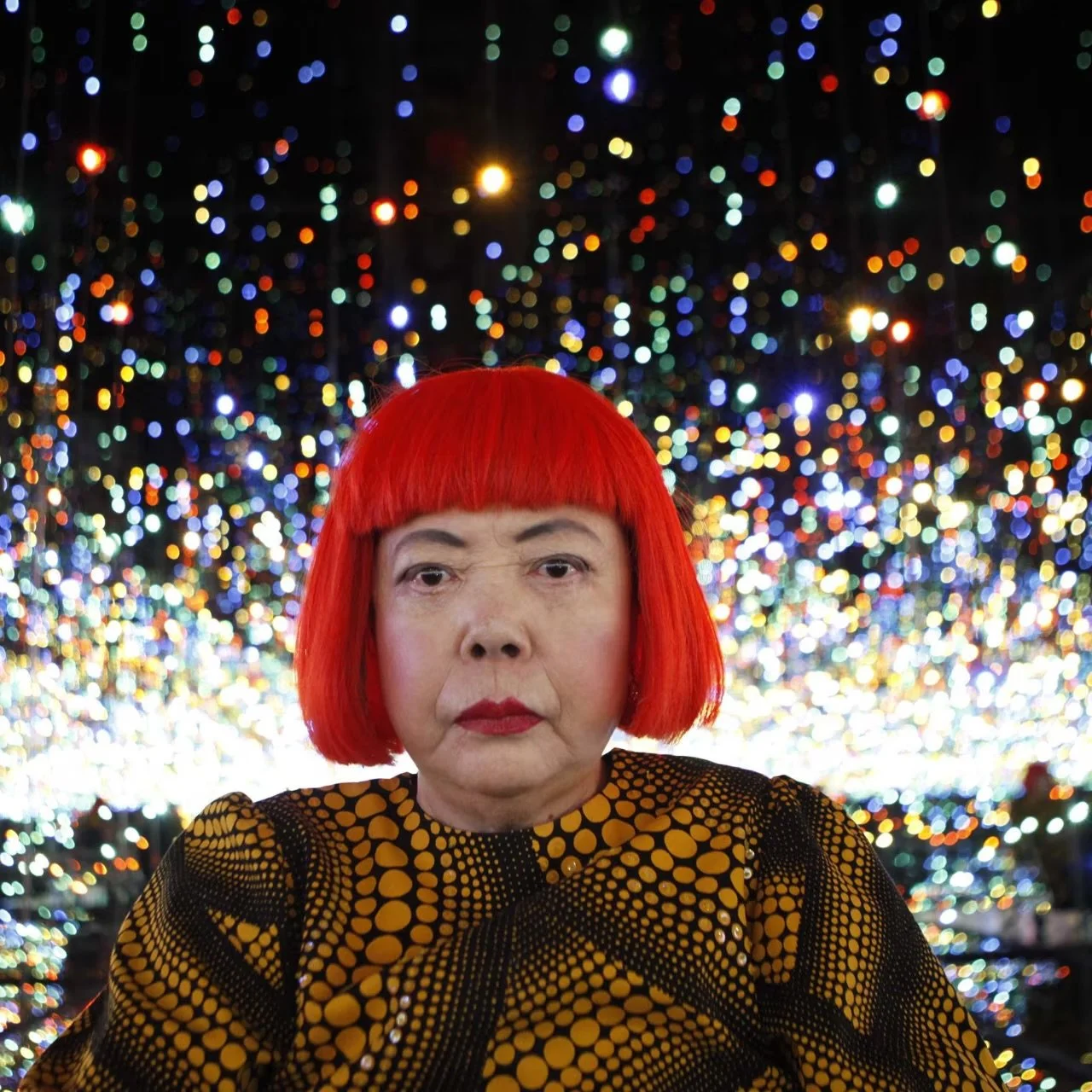
Infinity Net: The Autobiography of Yayoi Kusama, first published in Japanese in 2002.
Image: Tate Publishing
As the art world remembers the celebrated Japanese artist, the racism documented in her writing must remain part of the story.
Yayoi Kusama, the Japanese artist whose polka dots, pumpkins and Infinity Mirror Rooms made her one of contemporary art’s most recognisable figures, has died at 97. Her representatives said she died in a Tokyo hospital on 14 August 2026 and continued painting until her final days.
The tributes are understandable. Kusama built an extraordinary career across painting, sculpture, performance and literature, becoming a rare woman at the centre of the global art market. But an honest account of her legacy must also include something far less comfortable: a documented pattern of anti-Black racism in her writing—and the art world’s delayed response to it.
What did Kusama write?
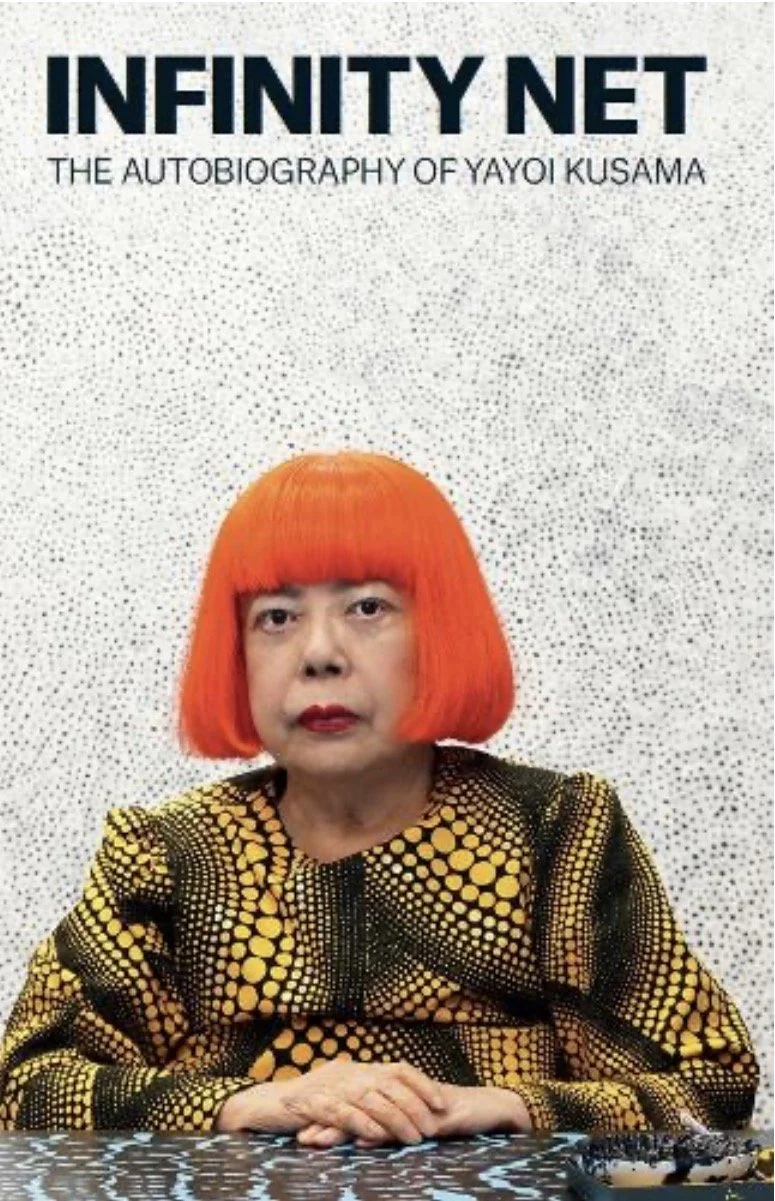
The controversy was not based on one carelessly chosen sentence. Across Kusama’s autobiography, fiction and drama, Black people were repeatedly depicted as primitive, hypersexual or animalistic.
Journalist Dexter Thomas detailed that pattern in a 2023 investigation for Hyperallergic. In Kusama’s acclaimed 1984 novel The Hustler’s Grotto of Christopher Street, Black characters were described through their smell and genitalia in a way white characters were not. A script for her 1971 play Tokyo Leee introduced its sole Black character as a “WILD-looking, hairy, coal-black savage.” Her 2002 autobiography, Infinity Net, similarly presented Black people as exotic and primitive.
The depictions are particularly striking because Kusama’s public image has often been connected to ideas of radical inclusion, peace and “communal healing.” Yet the Black people appearing in parts of her work were frequently treated less like complete human beings than objects of spectacle.
The sentence removed from the English edition
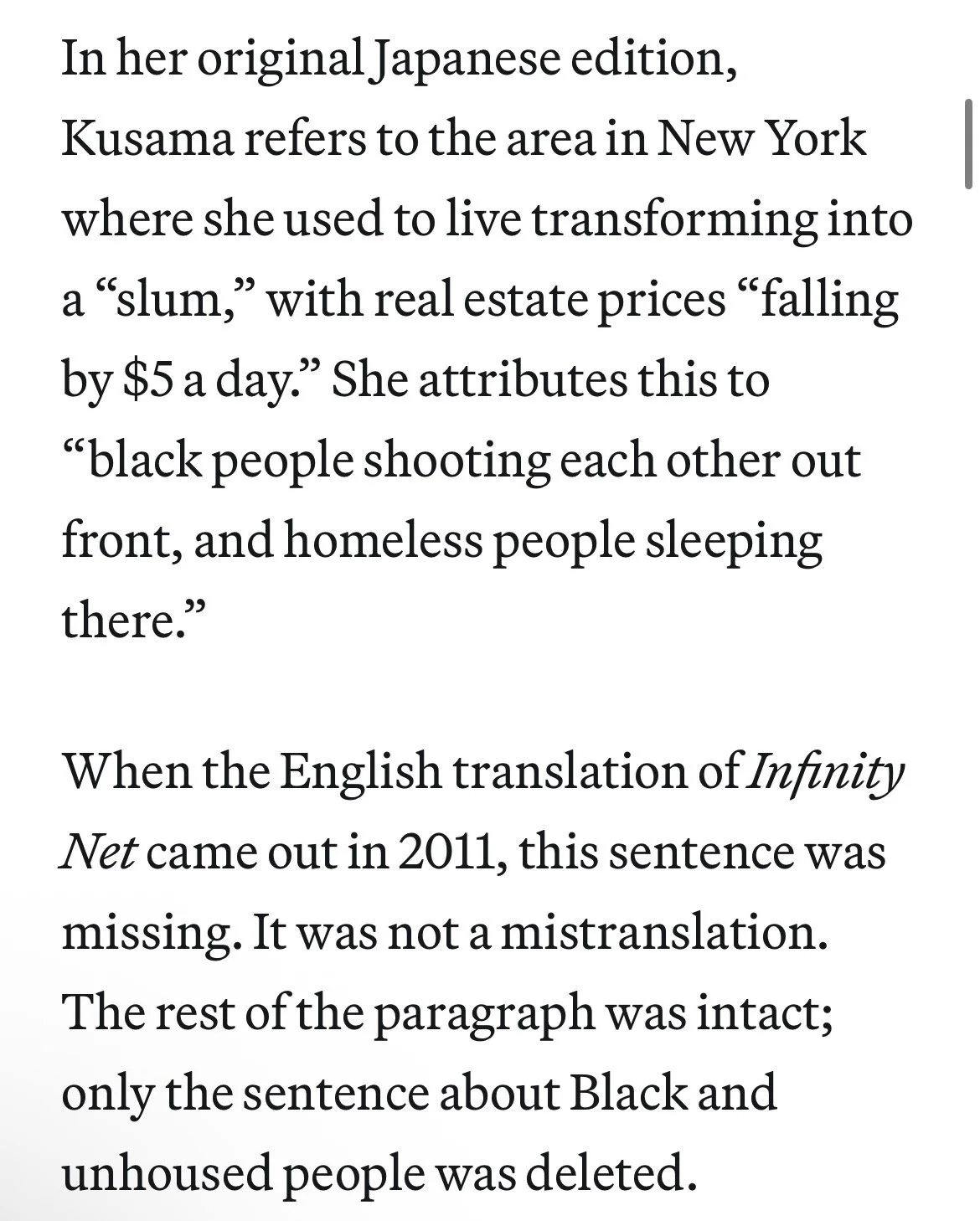
Original Japanese-edition passage
One of the clearest examples of how this history was softened for international audiences concerns Infinity Net.
In the original Japanese edition, Kusama described her former Greenwich Village neighbourhood as becoming a “slum,” blaming Black people shooting one another and unhoused people sleeping nearby. When the English translation appeared in 2011, that sentence was missing even though the remainder of the paragraph was retained.
There is no public evidence establishing exactly who ordered the deletion or why. Still, its selective removal matters. English-language readers were presented with a cleaner version of Kusama’s own account than readers of the Japanese edition.
An apology on the eve of a blockbuster exhibition
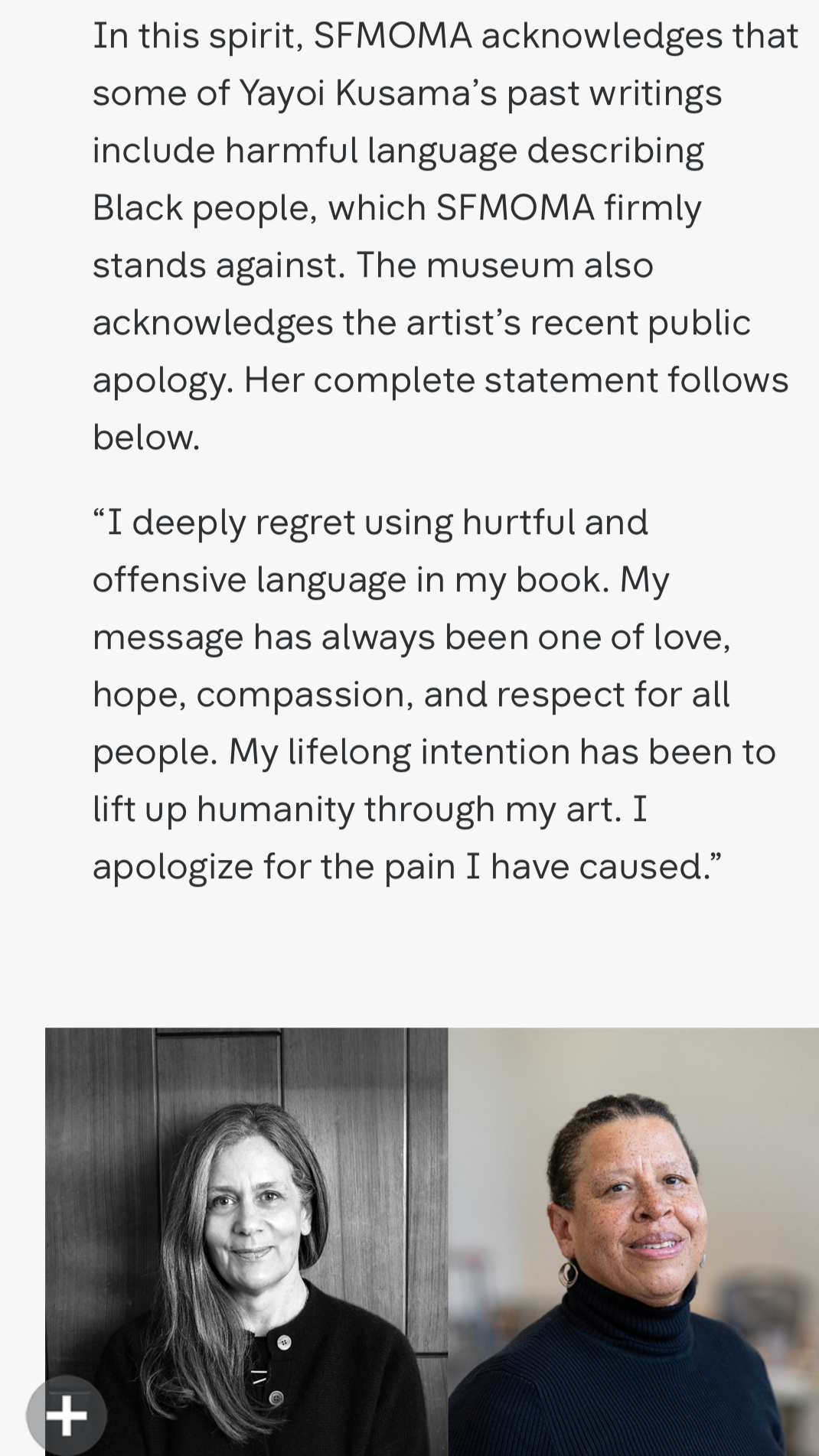
The criticism intensified in 2023, shortly before Yayoi Kusama: Infinite Love opened at the San Francisco Museum of Modern Art. Local community members pressed SFMOMA to address the artist’s comments, and the museum publicly acknowledged that her writing contained harmful descriptions of Black people.
Kusama then issued an apology, saying she deeply regretted using “hurtful and offensive language” and apologised for the pain she caused. The exhibition opened as planned.
It would be inaccurate to state as fact that Kusama was forced to apologise to save the exhibition. What can be said is that the apology arrived amid mounting journalistic scrutiny and community pressure, immediately before a lucrative, sold-out museum show.
Remembering the whole artist
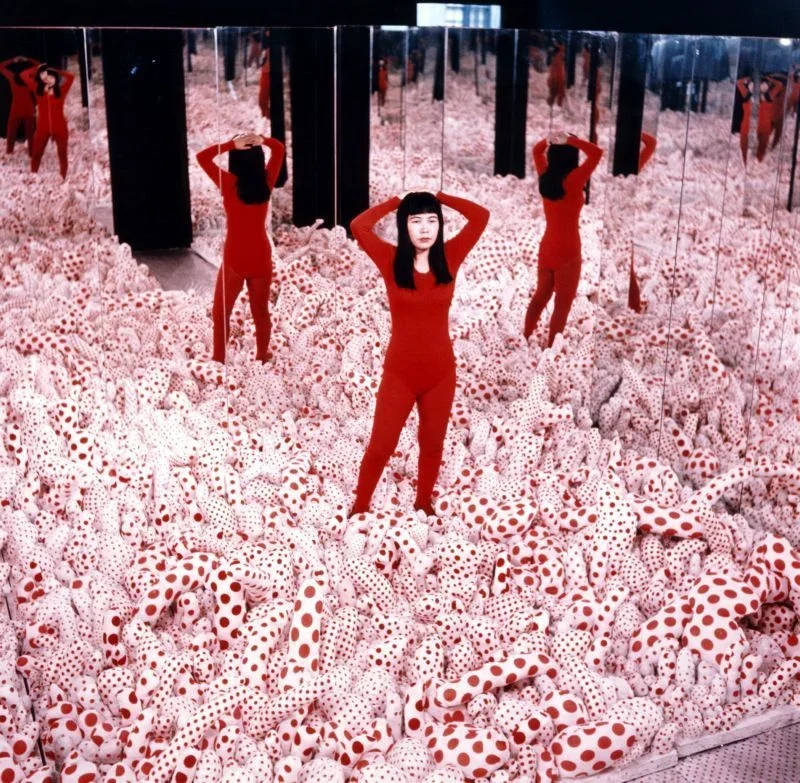
Kusama’s death does not require the public to choose between recognising her artistic importance and confronting her racism. Both are part of the same legacy.
Her experiences of sexism, xenophobia and mental illness shaped her life and art, but experiencing marginalisation does not make someone incapable of directing prejudice at another group. Nor should Kusama’s mental health history be used to dismiss a pattern that appeared across multiple published works.
The deeper story is therefore not simply that a celebrated artist held racist views. It is that cultural institutions helped build an immensely marketable symbol of love, healing and inclusion while the ugliest parts of her record received comparatively little attention—and, in at least one translation, were literally absent from the page.
Kusama’s art should not be erased. Neither should the history surrounding it.