

Alex Eala Isn't a Nepo Baby. She's the First Filipino to Win a WTA Title.
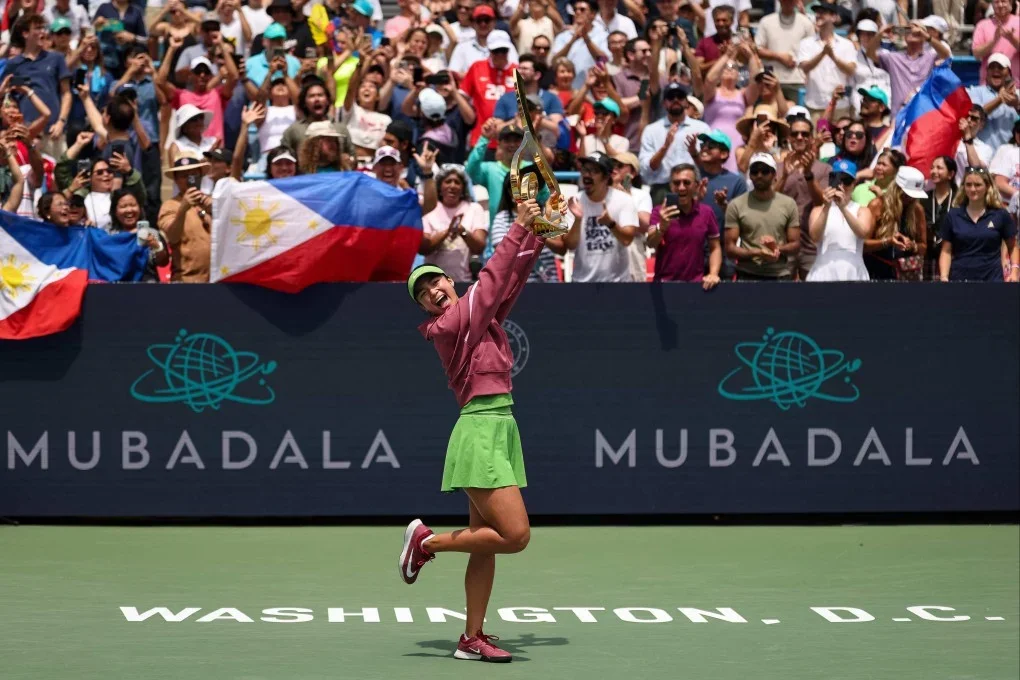
Alex Eala celebrates with the Mubadala DC Open trophy at Washington, D.C., as Filipino fans wave Philippine flags in the stands.
Alex Eala: Privilege, Personality, and the Discourse That Follows Her
Alex Eala is quickly becoming one of the WTA's most beloved; but also one of its most debated; players. It all comes down to two recurring conversations: privilege and personality.
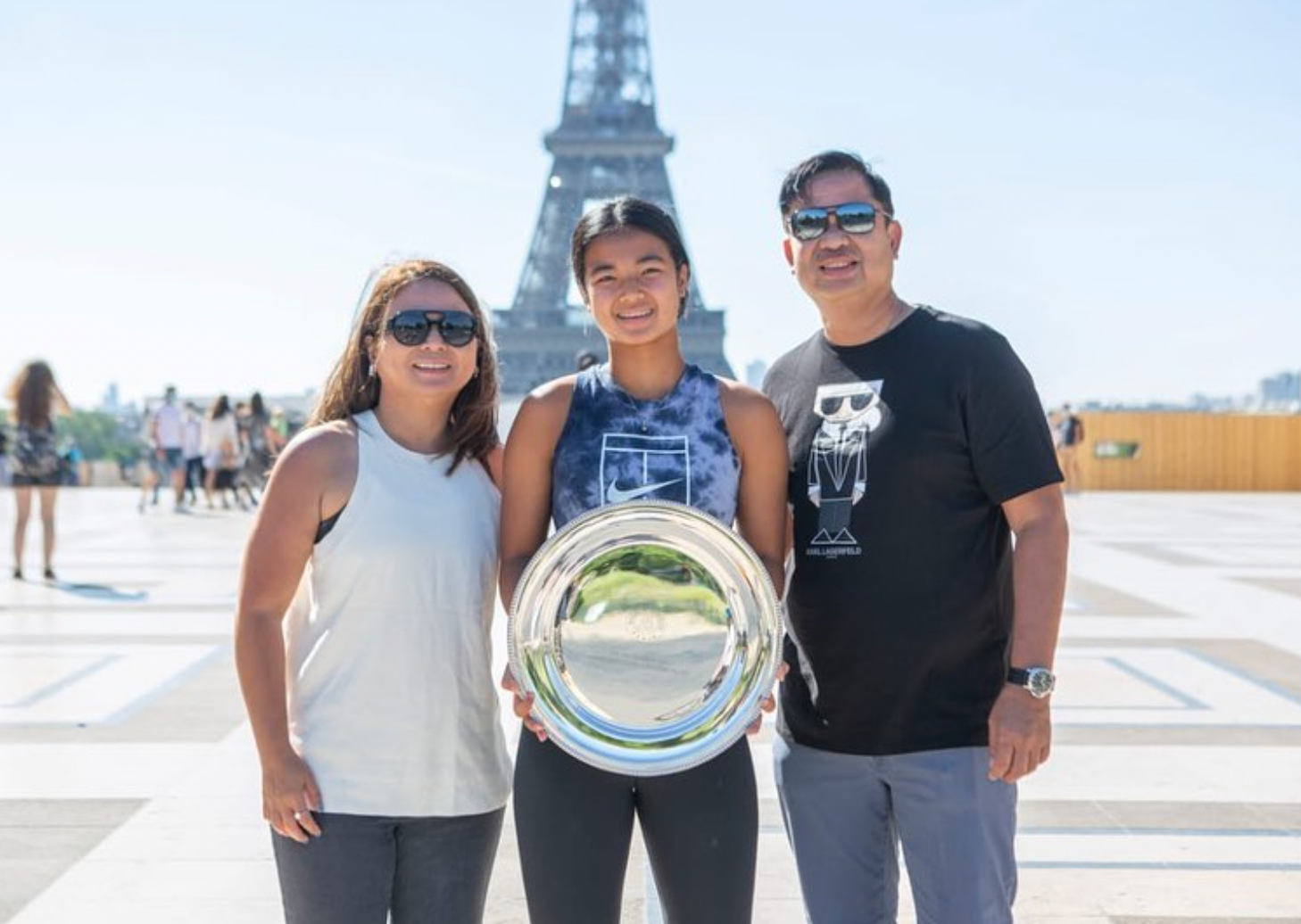
Alex Eala poses with her parents, Mike Eala and Rizza Maniego-Eala, in front of the Eiffel Tower holding a tournament trophy.
The Privilege Question
Eala comes from a successful, well-connected Filipino family. Her mother, Rosemarie "Rizza" Maniego-Eala, is a former SEA Games bronze medallist in swimming (100m backstroke, 1985) who went on to become Chief Financial Officer of Globe Telecom, one of the Philippines' largest telecom companies, before retiring in 2024. Her paternal uncle, Noli Eala, is a prominent Philippine sports administrator, having served as chairperson of the Philippine Sports Commission and commissioner of the Philippine Basketball Association. At just 13 years old, Alex left home to train full-time at the Rafa Nadal Academy in Spain.
Those opportunities undoubtedly gave her a head start. Because of that, some corners of the internet have labelled her a "nepotism baby" or suggested her family's status is the real reason she's succeeding.
But that's too simplistic.
For one, she's no Emma Navarro or Jessica Pegula, both daughters of American billionaires. Eala grew up privileged relative to the average Filipino, but she wasn't born into that tier of wealth or global influence.
There's also a distinction worth making that often gets missed: being well-connected and comfortable in a developing country is not the same as having the financial power and global network that follows you around the world. Access in the Philippines isn't automatically access on the global tennis circuit.
Privilege can open doors. It can help pay for coaching. It can help fund a spot at one of the best academies on earth.
What it can't do is win you matches.
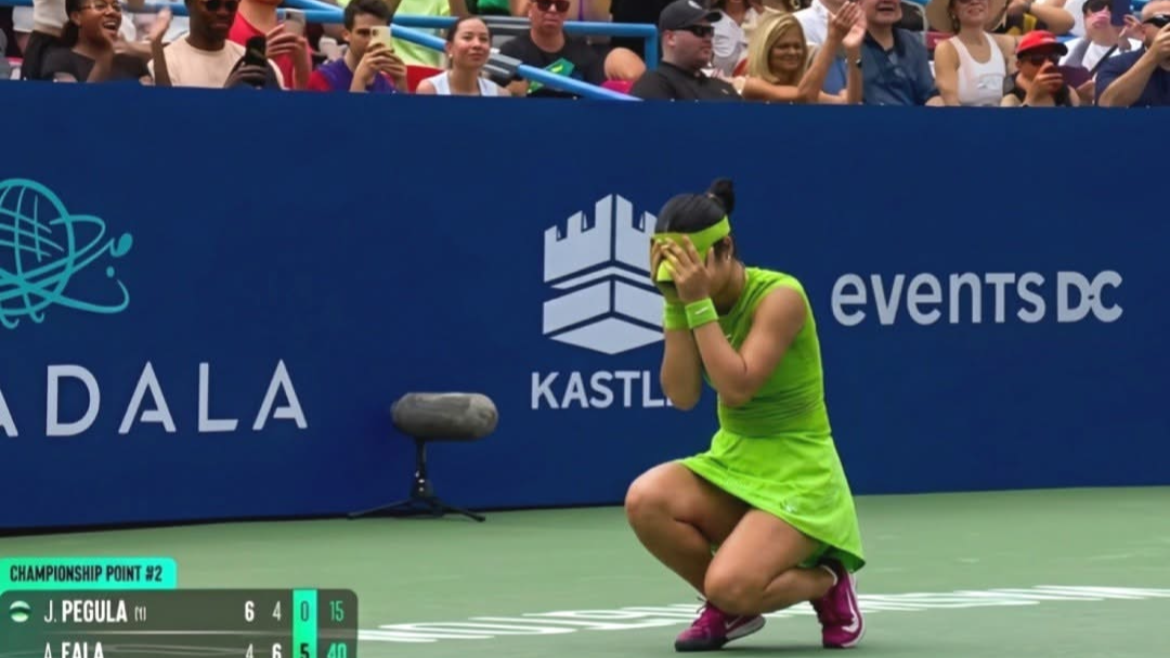
Alex Eala reacts on championship point during her 4-6, 6-4, 6-0 win over Jessica Pegula in the 2026 Mubadala DC Open final.
It didn't win Eala the 2022 US Open girls' singles title, which made her the first Filipino to capture a major junior title. It didn't beat Naomi Osaka, Iga Świątek, Elina Svitolina, Zheng Qinwen, Madison Keys, or the other top players she's taken down over the past two seasons. And it didn't hand her a WTA Tour title, she had to close that out herself, coming back to beat top seed Jessica Pegula 4-6, 6-4, 6-0 in the final of the 2026 Mubadala DC Open (Washington), becoming the first Filipino ever to win a WTA Tour singles title.
The Personality Question
Then there's the second reason Eala keeps finding herself at the centre of conversation: the way she celebrates.
Every time she wins a big match, a segment of the internet complains that she celebrates as if she's just won a Grand Slam.
Here's what's easy to love about it instead. Eala has spoken openly about leaning on prayer during matches, reciting the Our Father and Hail Mary to calm her nerves and stay locked in, a habit that traces back to her Catholic upbringing and schooling in Manila. For anyone raised in a similarly faith-centred household, that kind of ritual makes sense: it becomes part of your preparation, your confidence, your belief system on the court.
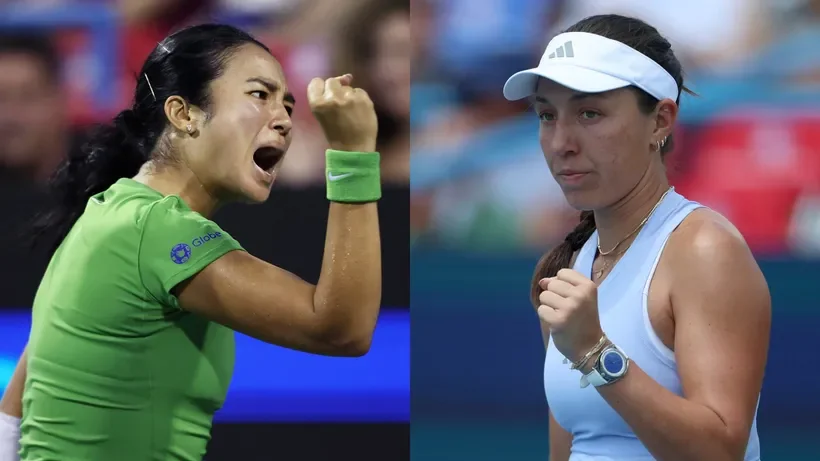
Close-up action shot of Alex Eala mid-match at the Mubadala DC Open, to the right, Jessica Pegula.
And after becoming the first Filipino player in the Open era to win a WTA Tour singles title; on top of being the first Filipino to crack the top 30, the first to beat a top-10 opponent, and the first to reach the fourth round of a Grand Slam, she's earned every bit of that celebration.
At some point, the results have to speak louder than the discourse. Right now, Alex Eala's tennis is doing exactly that.