

Children of Blood and Bone and Tears: How Tomi Adeyemi's Dream Adaptation Became Her Nightmare
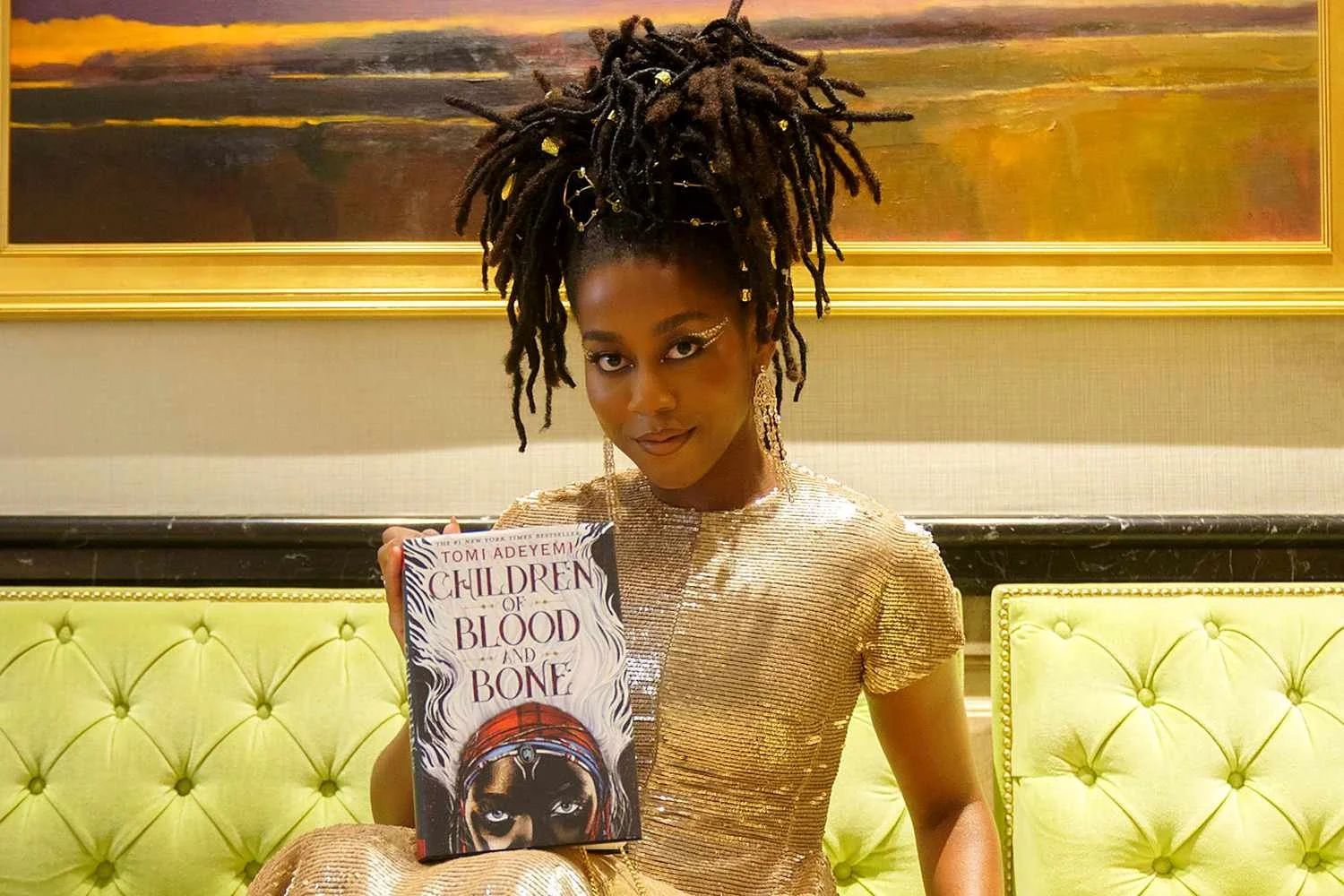
Tomi Adeyemi holding a copy of Children of Blood and Bone.
How does your passion project you wrote at 21 become your worst nightmare years later, when it's at the cusp of a theatrical release?
Tomi Adeyemi wrote the screenplay. She's credited as executive producer. She's the author who built this entire whimsically African world from scratch, back when there weren't dozens of fantasy covers featuring Black girls like her protagonist Zélie. And this week, she told her fans she doesn't ever want to hear about the movie again, and that she still hasn't been able to bring herself to watch it.
That's not the kind of sentence you expect from someone who's about to have their bestselling novel hit theaters in a matter of months. But it's exactly where Tomi Adeyemi and the Children of Blood and Bone film adaptation have landed, after eighteen months of what she's now calling, in her own words, "the worst thing I have ever had to live through."
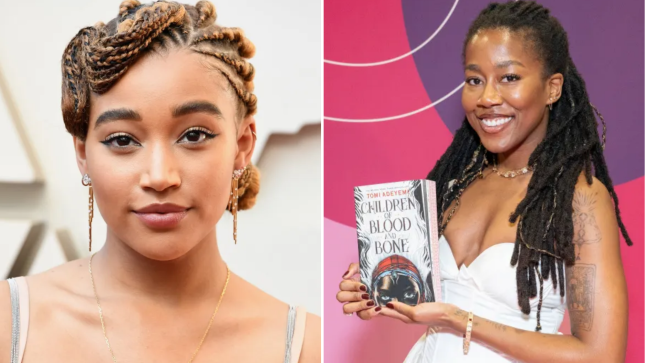
Amandla Stenberg (left) and Tomi Adeyemi (right), whose falling out became public this July.
The block that started it
The first real crack in the story showed up earlier this July, in a TikTok Adeyemi posted and then quietly deleted. In it, she shared screenshots of messages sent to unidentified recipients, including one particularly pointed text to co-star Amandla Stenberg: "Do not ever use my name in an interview or video again. Do not text me. Do not call me." The screenshot showed she'd blocked the actress entirely.
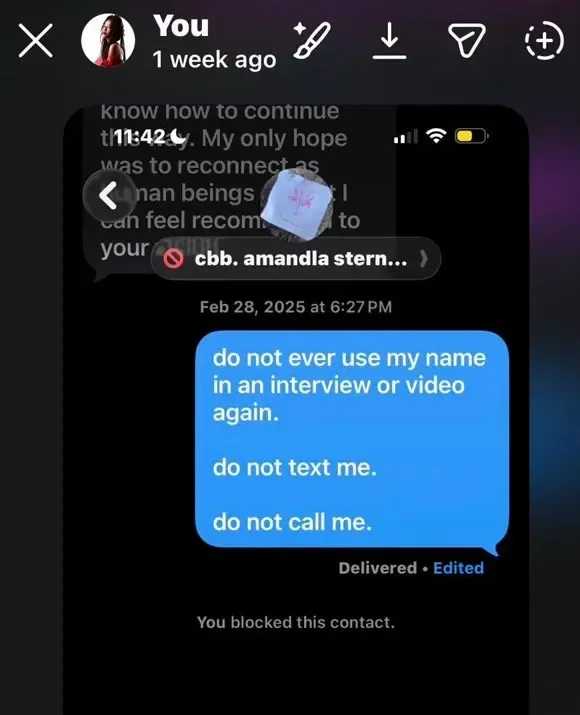
A screenshot of Adeyemi’s now-public text blocking Stenberg, dated February 2025.
Here's the twist that got lost in the initial headlines: the timestamp on that message showed it had actually been sent back in February 2025, over a year before Adeyemi posted it. The block itself wasn't news. What was news is that Adeyemi chose, over a year later, to make it public.
Stenberg, who plays Princess Amari, had her own complicated run-up to the role. Her casting drew backlash from longtime readers over allegations of colorism, criticism she addressed directly in her own since-deleted TikTok, saying she trains hard for the part and thinks carefully about "the space I occupy" with every role she takes. Whatever happened between her and Adeyemi, it's tangled up with a casting controversy that was already simmering before either woman said a word about the other.
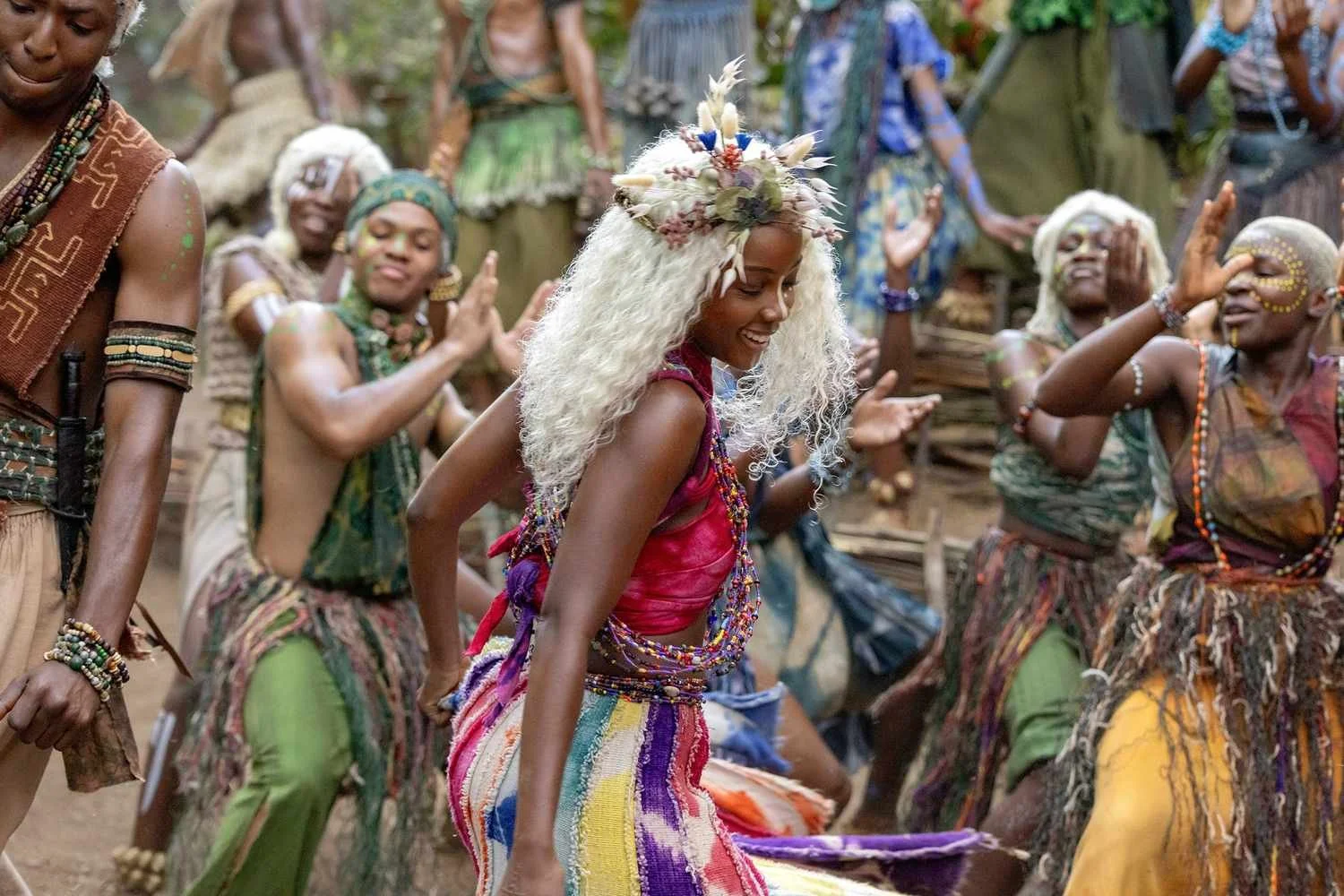
A scene from the Children of Blood and Bone film adaptation.
Then the trailer dropped
Fast forward to late July. The first official trailer for Children of Blood and Bone hits the internet, a starry ensemble cast including Viola Davis, Idris Elba, Cynthia Erivo, Lashana Lynch, Regina King, and Chiwetel Ejiofor, directed by The Woman King's Gina Prince-Bythewood. By all appearances, a big swing at bringing West African-inspired fantasy to the same scale as Black Panther.
Twenty-four hours later, Adeyemi was back on social media with a five-minute video. And this time there was no ambiguity about how she felt.
"The worst thing I have ever had to live through"
In the video, posted Wednesday, July 29, Adeyemi said the production of the film adaptation of her own novel was "the worst thing I have ever had to live through." She described leaving the set "hyperventilating and sobbing," said she still refuses to watch the finished film, and claimed that people at "the highest level" of the production had been made aware of what she was going through, and instead of fixing it, had only "antagonized" her further.
Then came the line that's going to follow this story for months: "I never want to hear about this project again."
And that was basically it. No specifics about what happened on set. No naming names beyond what she'd already implied about Stenberg. No account of what "antagonizing" actually looked like. Just an emotional, clearly exhausted statement from someone who sounds completely done, without ever explaining, in any concrete way, what she's done with.
What we still don't know
This is the part of the story that's genuinely unresolved, and worth sitting with instead of filling in with speculation: nobody outside the production knows exactly what happened. Adeyemi hasn't detailed the specific incident that pushed her to step back, and reshoots earlier this year have only added fuel to the guessing game. Did the studio rewrite her script out from under her? Was it a conflict specifically with Stenberg, or something structural about how much control she actually had as "co-writer" and "executive producer" versus how much control those titles suggest she should have had?
Paramount and Prince-Bythewood's team haven't responded to press requests for comment. So for now, the record is exactly what Adeyemi has chosen to say publicly, emotional, repeated, and pointed, but light on detail.
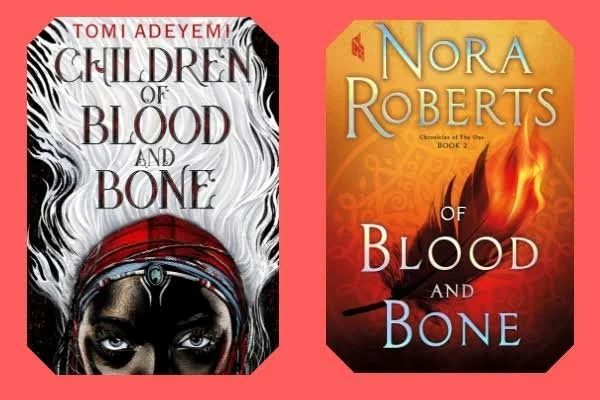
The 2018 cover controversy: Adeyemi’s Children of Blood and Bone beside Nora Roberts’ Of Blood and Bone.
The bigger pattern
Strip away the specifics of this one production, and there's a familiar shape underneath it: an author sells the rights to their own world, gets handed titles like "co-writer" and "executive producer" that sound like creative control, and then discovers, sometimes gradually, sometimes all at once, how much of that control was symbolic. Adeyemi isn't the first author to end up here. She's just the most recent, and one of the most public.
It's also not the first time Adeyemi's frustration has spilled into a public callout before all the facts were settled. Back in 2018, right as Children of Blood and Bone was published, she accused romance novelist Nora Roberts of plagiarizing her title after Roberts released a thriller called Of Blood and Bone. Adeyemi apologized within a day, after Roberts explained her book had actually been titled and submitted to her publisher a full year before Adeyemi's, but not before her fans had already piled onto Roberts online. It's a small, seven-year-old footnote, but it's worth knowing going into this: Adeyemi has a track record of going public fast, sometimes faster than the facts can keep up.
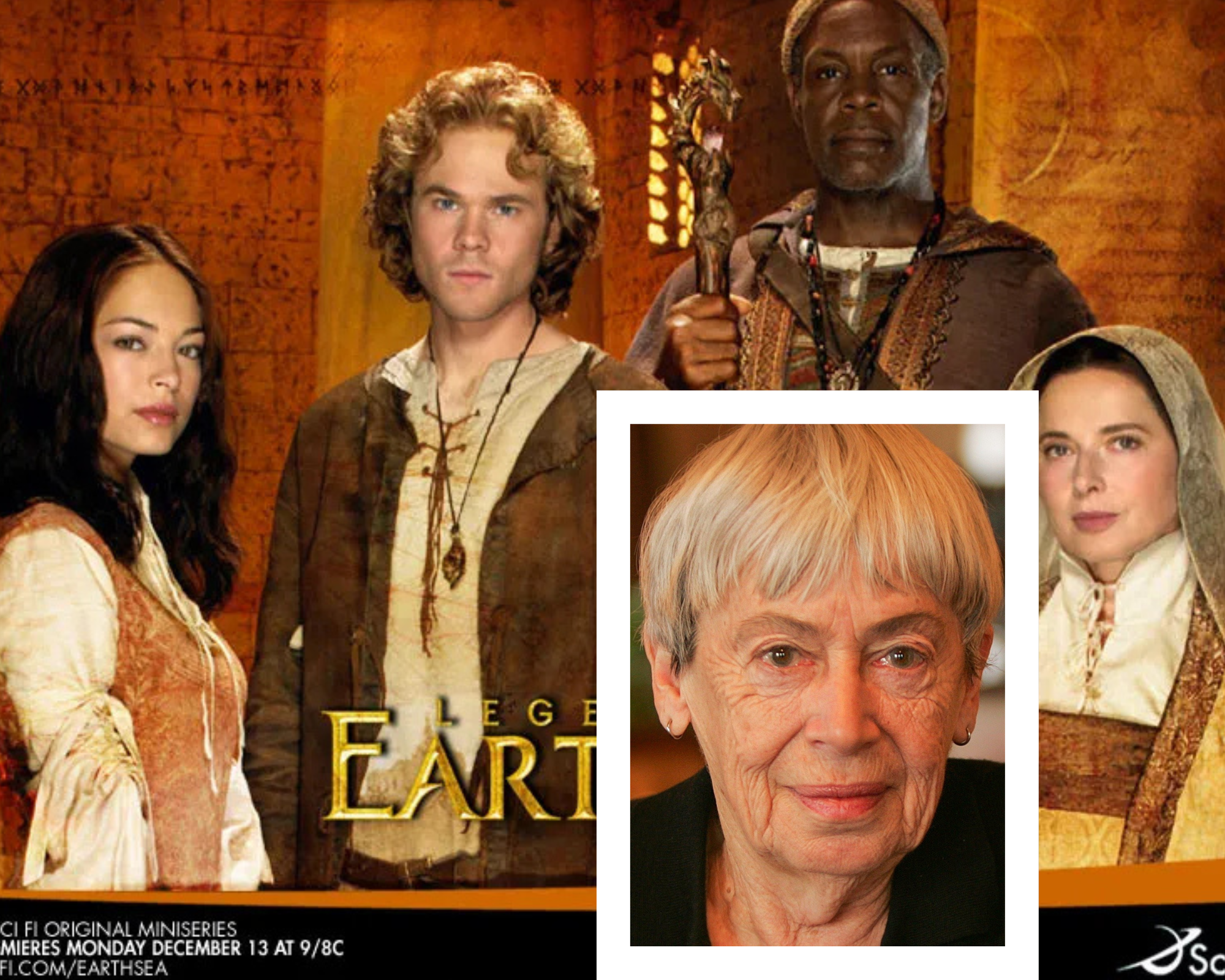
Ursula K. Le Guin beside the cast of the 2004 Legend of Earthsea miniseries she publicly disowned.
Ursula K. Le Guin went through arguably the most direct version of this in 2004, when the Sci-Fi Channel adapted her Earthsea novels into a two-part miniseries. Le Guin's contract gave her the standard "consultant" status most authors get, which, as she later put it, "means whatever the producers want it to mean, almost always little or nothing." She'd agreed to sell the rights partly because a specific screenwriter, Philippa Boyens (who'd co-written The Lord of the Rings), was attached, and then Boyens left the project before it ever got made. Le Guin stayed silent for months while production went on, then published a scathing essay in Slate titled "A Whitewashed Earthsea," pointing out that her protagonist Ged, written as a boy with red-brown skin, had been cast as a white actor, and that race, which she called a "crucial element" of the books, had been erased from the adaptation entirely. She wrote that she genuinely didn't recognize the plot as her own story.
Alan Moore took the opposite approach: instead of speaking out once, he's spent over two decades refusing to engage at all. After disagreements with Warner Bros. over the From Hell and League of Extraordinary Gentlemen adaptations, Moore's standard move became demanding his name be stripped from any film based on his comics, V for Vendetta, Watchmen, Constantine, all of it. He's said publicly he's never watched any of the adaptations and doesn't take royalties from most of them. In a later interview, he described the process of disowning his own work as feeling "like a bit of an amputation," painful, but the only way he had to "cut out the poison" once he'd lost control of how his stories were told.
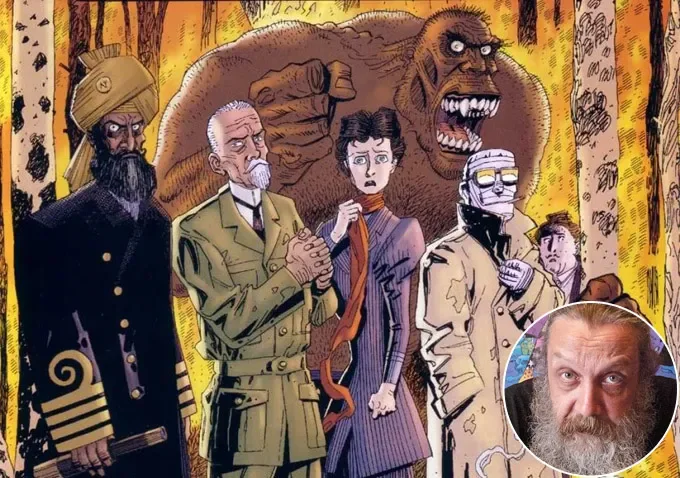
Alan Moore beside artwork from The League of Extraordinary Gentlemen, one of several adaptations he’s asked his name removed from.
Both cases share the same root as Adeyemi's: an author with real creative ownership on paper, and none of it in practice once cameras started rolling. The difference is mostly in temperament. Le Guin wrote one furious, precise essay and moved on; Moore built two decades of total non-participation; Adeyemi's version has played out in real time, over multiple emotional videos, while the release date keeps getting closer.
What makes Adeyemi's version sting a little more is the weight this specific book carried. Children of Blood and Bone wasn't just a novel to her, she's talked before about how there weren't book covers like Zélie's when she started writing it, and about wanting this adaptation to make it "impossible for a young Black girl not to see herself" on screen. That's a lot of meaning to hang on a production she now says she can't even bring herself to watch.
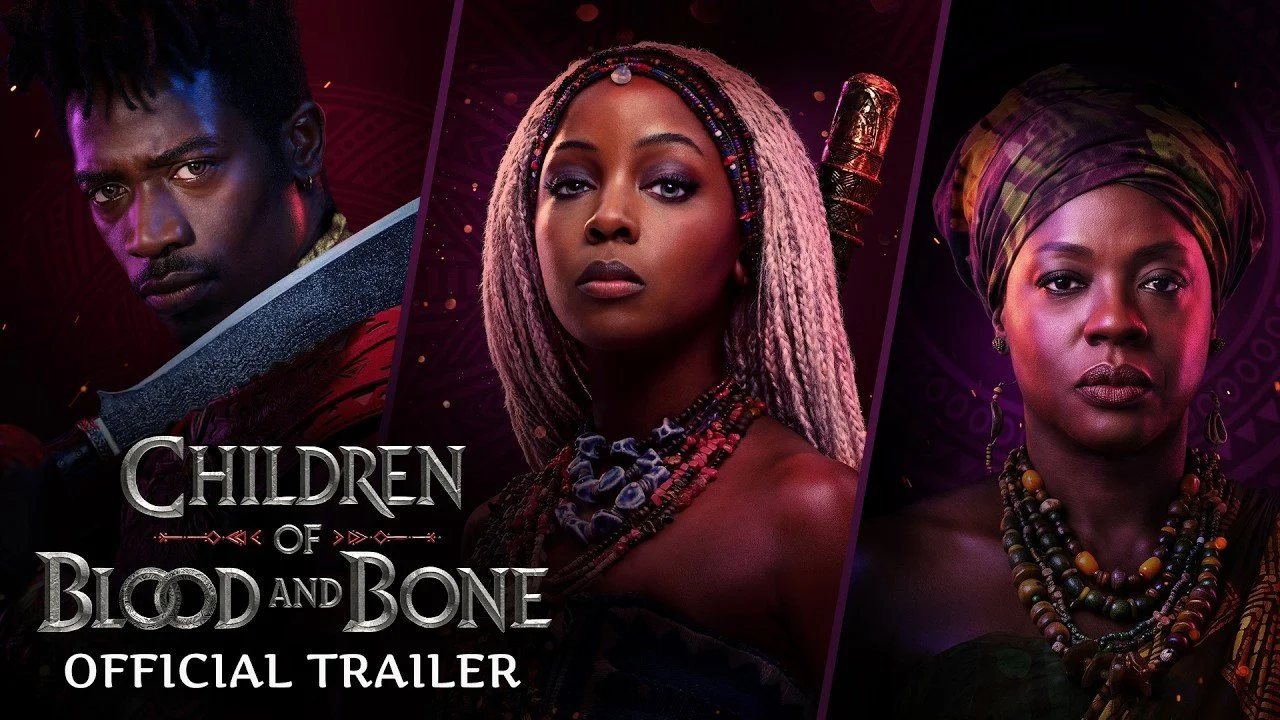
The official trailer for Children of Blood and Bone, released July 2026.
Where it stands now
Children of Blood and Bone is still scheduled to hit theaters January 15, 2027. Adeyemi remains credited as co-screenwriter and executive producer, though it's unclear what, if any, involvement she'll have between now and release. She's said she's done talking about it. Whether she actually stays quiet for the next five months, or whether more of this story leaks out before the movie ever reaches a theater, is the real cliffhanger nobody signed up for.