

The Great Tennis Hangover
What Happens Between Wimbledon and the US Open
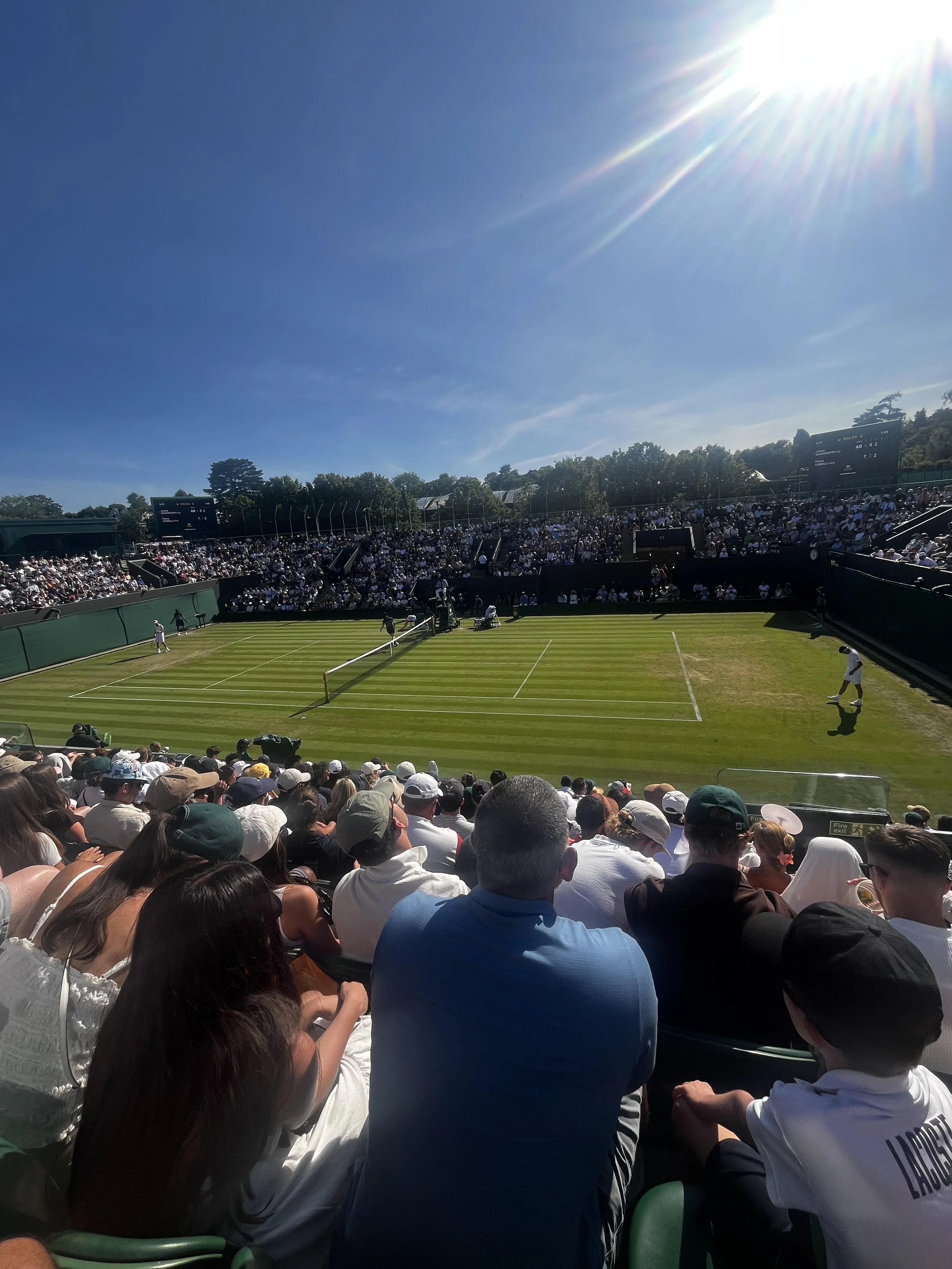
Spectators gather on the Wimbledon grounds during The Championships, where the grass-court season reaches its climax before the tour shifts to North America.
Just over a week ago, Wimbledon came to a close. Jannik Sinner lifted his first Wimbledon title after defeating Alexander Zverev, while Linda Nosková became the youngest women's champion in 15 years by overcoming fellow Czech Karolína Muchová. Ever since, I've been chasing that same sporting high. This year was my first Wimbledon, and from watching Flavio Cobolli battle James Duckworth on the outside courts to witnessing Centre Court's biggest moments unfold from the grounds of Henman Hill, I left with the same feeling many tennis fans do every July: now what? But despite what the calendar suggests, the weeks after Wimbledon aren't really a break. They're a transition. As the sport leaves the manicured lawns of Britain for the hard courts of North America, it begins a new chapter that trades centuries-old tradition for spectacle, speed and the road to the US Open.
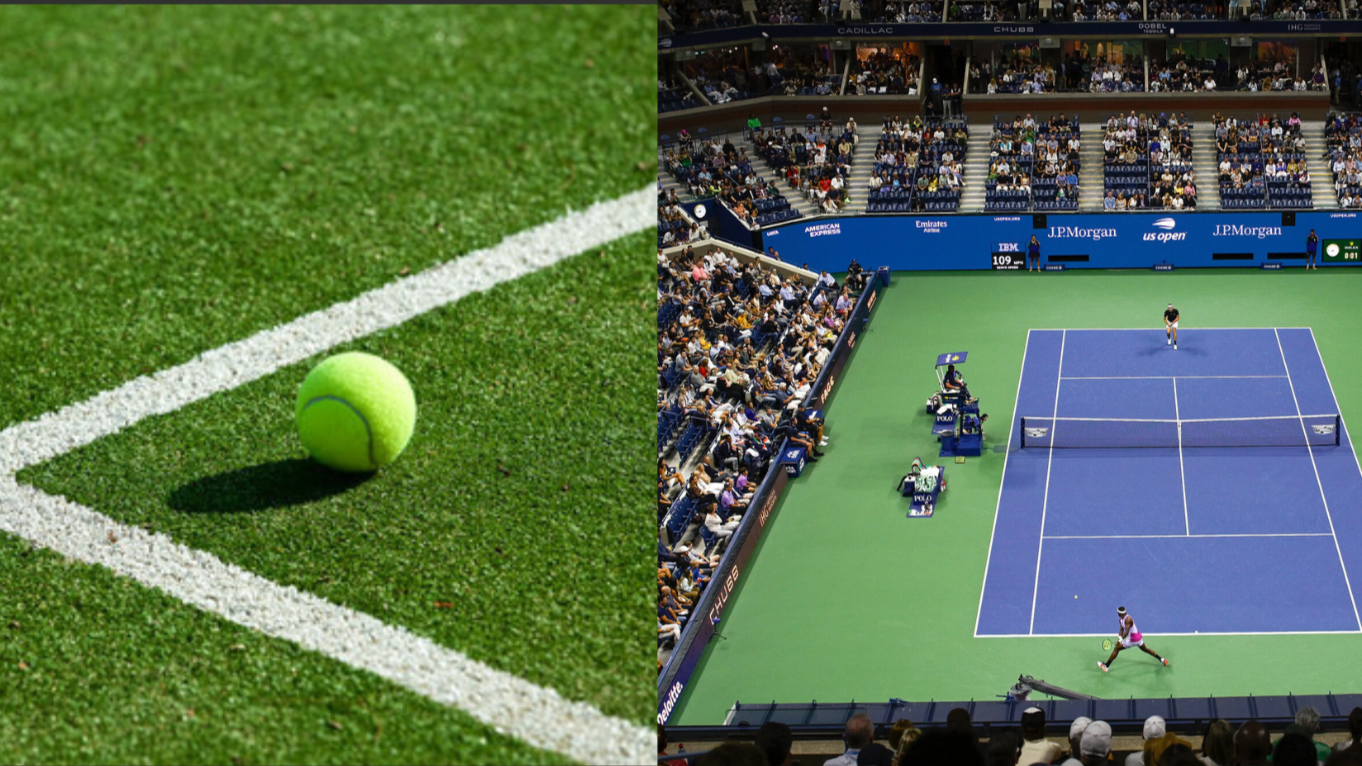
The ATP and WTA Tours transition from grass courts at Wimbledon to hard courts across North America in preparation for the US Open.
Why This Gap Exists
That timeline isn't random, it's built around a hard physical and commercial reality. Grass and hard courts reward completely different games, so players need real time to retool footwork, timing, and shot selection. Let’s also keep in mind grass-season tennis is punishing on the body, and the "break" starts looking less like a vacation and more like a pit stop. And there's a business layer too: these hard-court events are packaged together as the "US Open Series," which is exactly why broadcasters and sponsors treat this stretch as a slow-building lead-in rather than a lull. That packaging raises an obvious follow-up: if it's built to build toward the Open, who actually benefits from it?
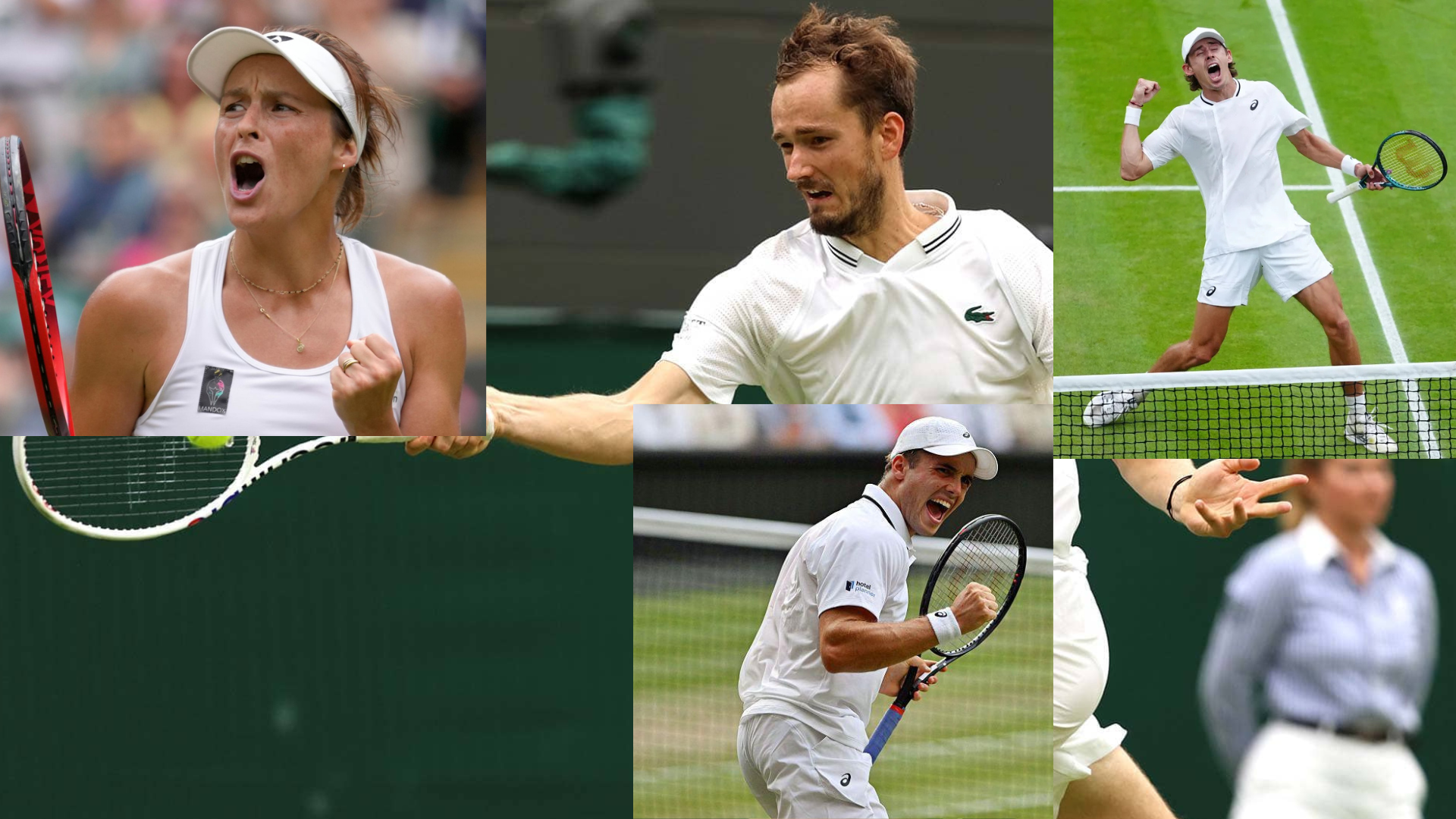
From left to right: Tatjana Maria, Daniil Medvedev, Arthur Fery and Alex de Minaur. As the grass-court season comes to an end, players begin adapting their games to the hard courts of the North American swing ahead of the US Open.
Who Wins and Loses in This Window
This is where the storylines live. Grass-court specialists don't get the same runway once the tour moves to hard courts. The surface shift can undo a great Wimbledon almost as quickly as it created one. Tatjana Maria is the clearest case. Her win percentage climbs above 61% on grass but falls below 50% on both hard courts and clay, meaning a strong Wimbledon run doesn't reliably translate into hard-court results heading into New York. Adrian Mannarino is another player whose game has traditionally flourished on grass. Alex de Minaur also owns his highest career win percentage on the surface, even though he has consistently produced strong results on hard courts. Grass rewards qualities that suit all three players, but the move to North America presents a different challenge.
Hard-court specialists, by contrast, often use this stretch to peak. Daniil Medvedev is the textbook example. The self-described hard-court specialist has consistently produced his best tennis on the surface and has already reached the Australian Open and Indian Wells finals, as well as the Miami semi-finals, this season. For players like him, this isn't a period of recovery. It's the beginning of the part of the calendar that best suits their game.
Which is why the carry-over question cuts both ways. Can players who impressed at this year's Wimbledon, including Cam Norrie and Arthur Fery, carry that momentum onto hard courts, or does it disappear with the grass? The answer won't be clear for several weeks. And that's exactly what makes this in-between period so fascinating. While players are adjusting to a new surface, fans are left watching a sport quietly reinvent itself before the US Open takes centre stage.
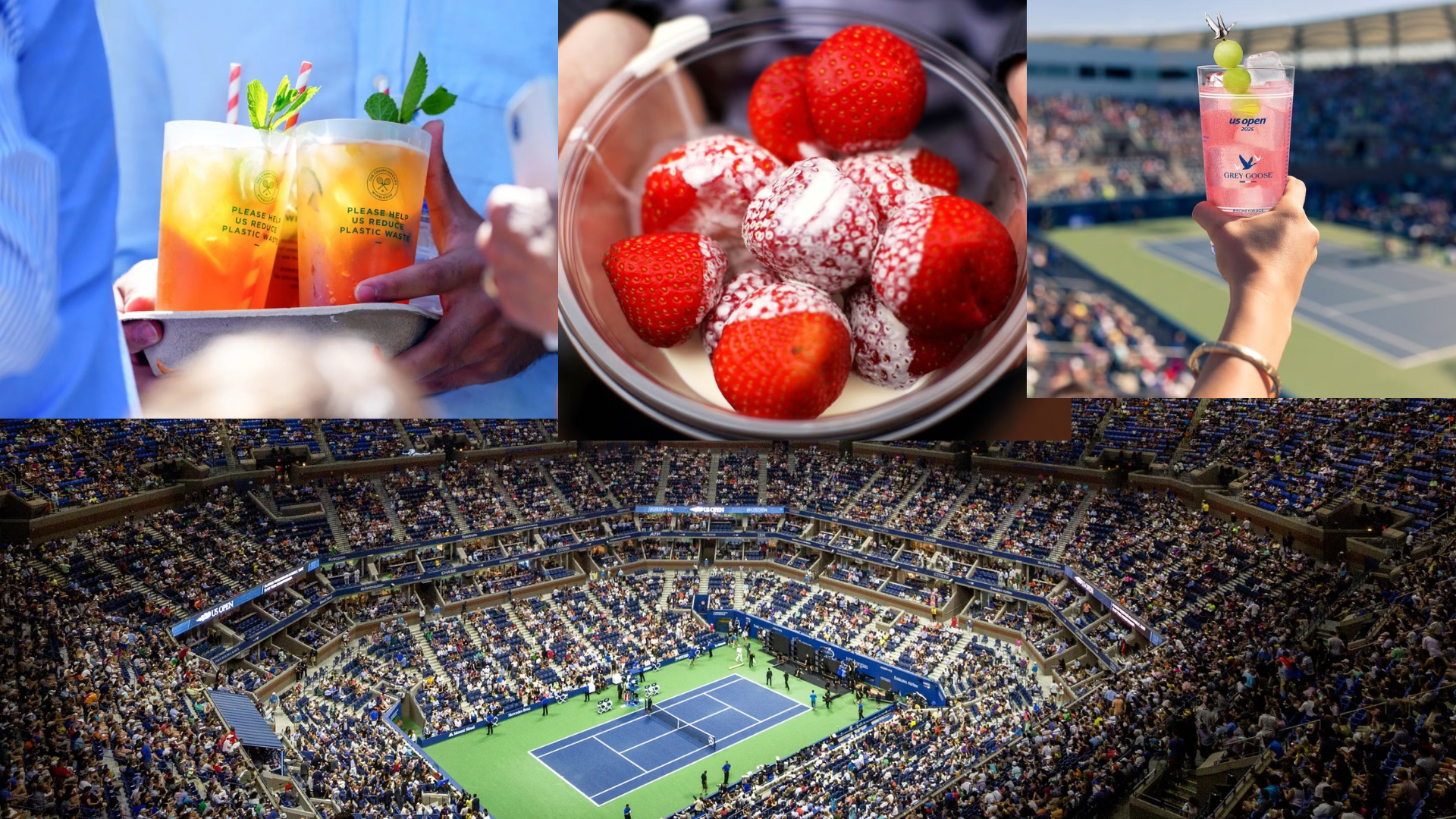
From Wimbledon's iconic Pimm's to the US Open's Honey Deuce, signature drinks have become part of each Grand Slam's identity and fan experience.
Culture & Entertainment
We will be witnessing a shift from the prim and proper green lawns of SW19 to the bustling crowds and reverberating music that fill Arthur Ashe Stadium. At Wimbledon, everything is ritual. Players wear strict all-white, strawberries and cream take pride of place over typical stadium concessions, crowds are quickly hushed if applause comes at the wrong moment, there is no walk-on music, and silence between points is part of the theatre. Even getting in has its own ceremony, with fans like me queuing for hours, sometimes overnight, for the privilege of a ticket. It's less a sporting event than a garden party that occasionally has tennis in it.
The US Open embraces the opposite philosophy. Every player has a walk-on song, DJs soundtrack the changeovers, and Arthur Ashe Stadium, the largest tennis stadium in the world, is built for scale and noise rather than silence. Matches stretch deep into the night under the lights, fans sip Honey Deuces instead of Pimm's, and the tournament is reached by subway in the heart of Queens rather than hidden behind the walls of a private club. Wimbledon's genteel, garden-party atmosphere gives way to something louder and distinctly American. Sponsorship is woven into the spectacle instead of being kept politely in the background.
Even the road to New York reflects that transition. The cities themselves become part of the story. Toronto, Montreal and Cincinnati each enjoy a moment as tennis-tourism destinations, creating a rare stretch of the calendar where the tour trades global capitals for mid-sized North American cities. It is there that the build-up to the year's loudest Grand Slam truly begins.
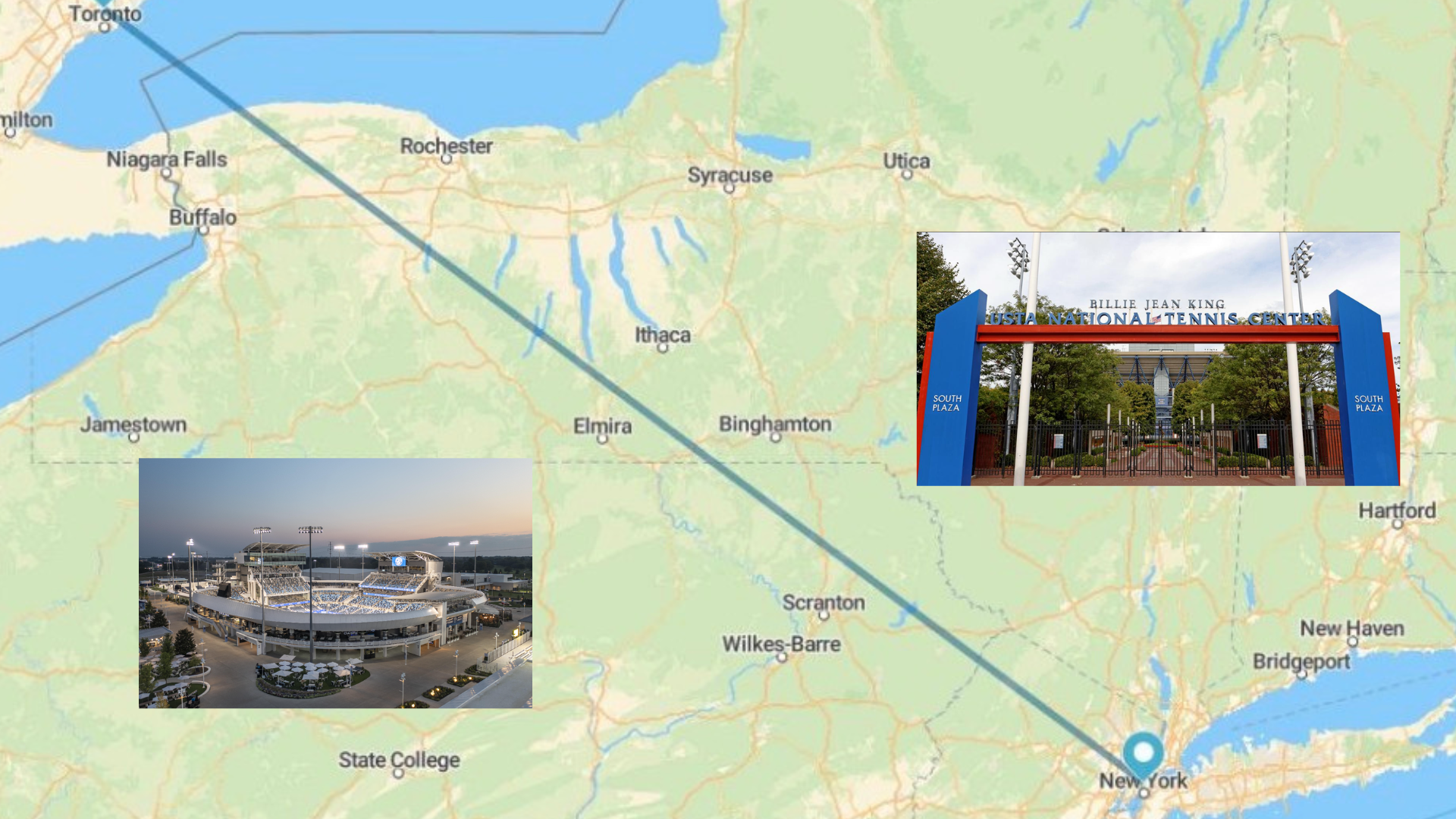
The summer tennis calendar moves quickly from Wimbledon to the North American hard-court swing, culminating in the US Open.
This stretch isn't just atmospheric. It's predictive. Recent history suggests that Cincinnati can be one of the clearest indicators of who is ready to contend in New York. Novak Djokovic completed the Cincinnati–US Open double in 2023, while Jannik Sinner and Aryna Sabalenka did the same in 2024. That's not so much a coincidence as a signal. Cincinnati sits close enough to the US Open in timing, surface and conditions that form there often carries straight into New York. The gap between Wimbledon and the US Open isn't disconnected from the final Grand Slam of the season. It's a preview of what's to come.
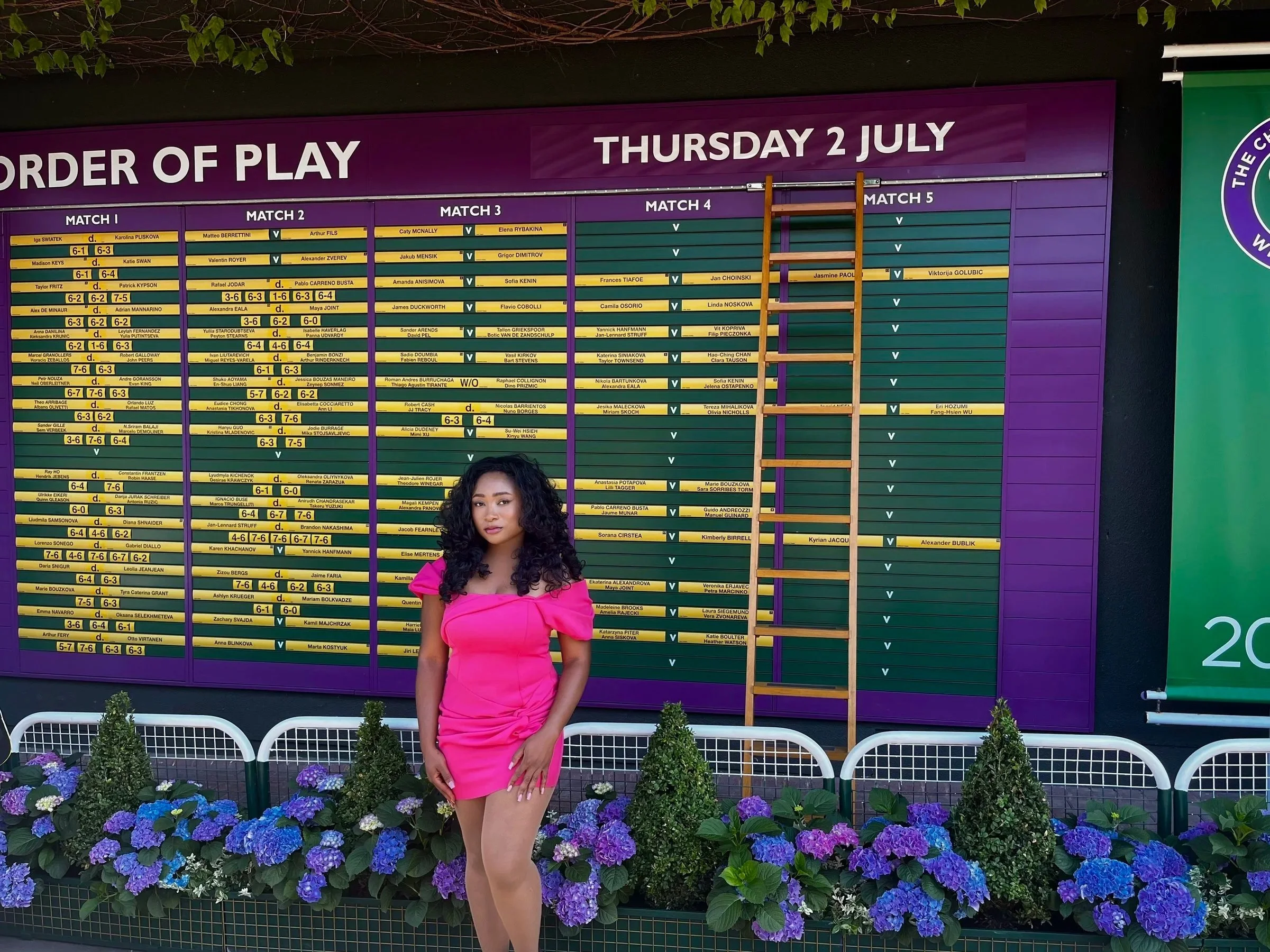
On the grounds of the 2026 Wimbledon Championships during coverage of this year's tournament.
So maybe that's the real answer to the restlessness I felt walking away from Wimbledon. The "hangover" isn't actually a gap at all. It just wears a disguise. Behind the quiet, players are rebuilding their games from the ground up, cities that rarely get a moment in tennis's spotlight are having theirs, and somewhere in Cincinnati the outline of the US Open champion is probably already being drawn. By the time the lights come on at Arthur Ashe and the first walk-on song plays, the story won't be starting fresh. It will already be halfway written. The wait for New York was never really a wait. It was the opening act.